



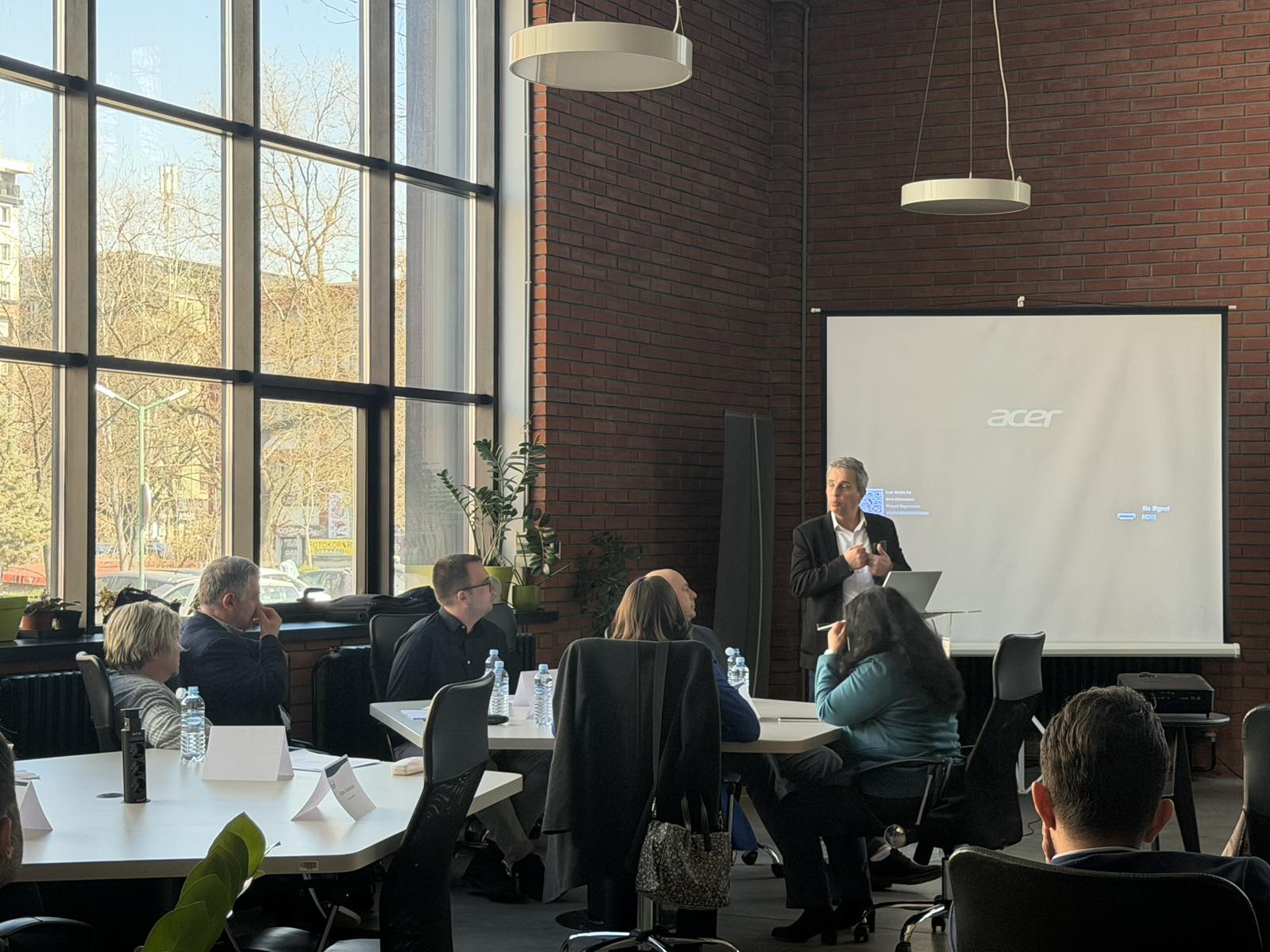
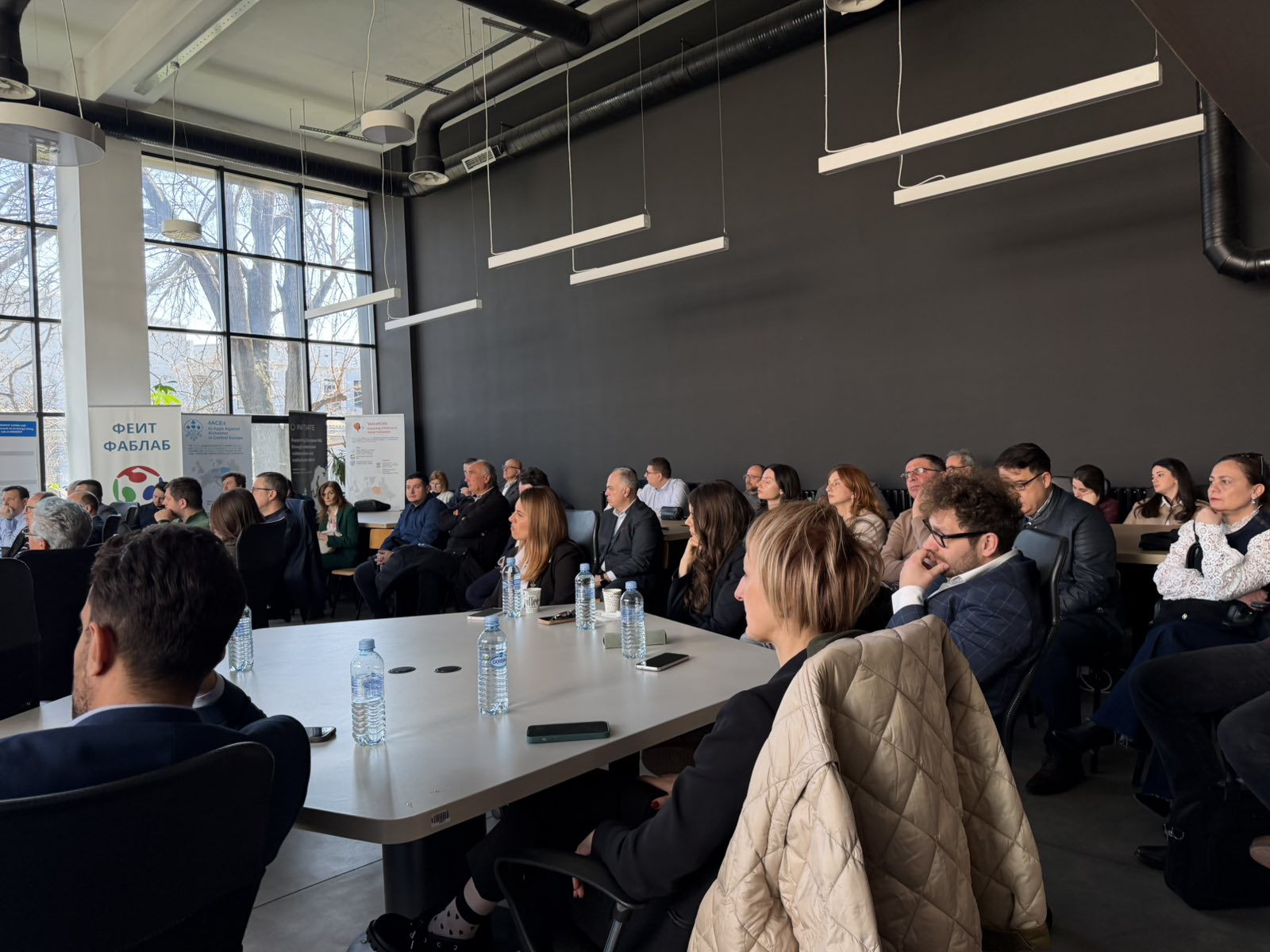

The topic “Experiences and Challenges in the Introduction of the Carbon Border Adjustment Mechanism (CBAM)” was the focus of a panel discussion held at the Faculty of Electrical Engineering and Information Technologies (FEIT), organized by the Association of Energy Specialists – ZEMAK. The panel, moderated by the President of ZEMAK, Borko Aleksoski, addressed the implications of implementing this mechanism, which entered into force on 1 January this year, as well as its impact on the energy sector and industry.
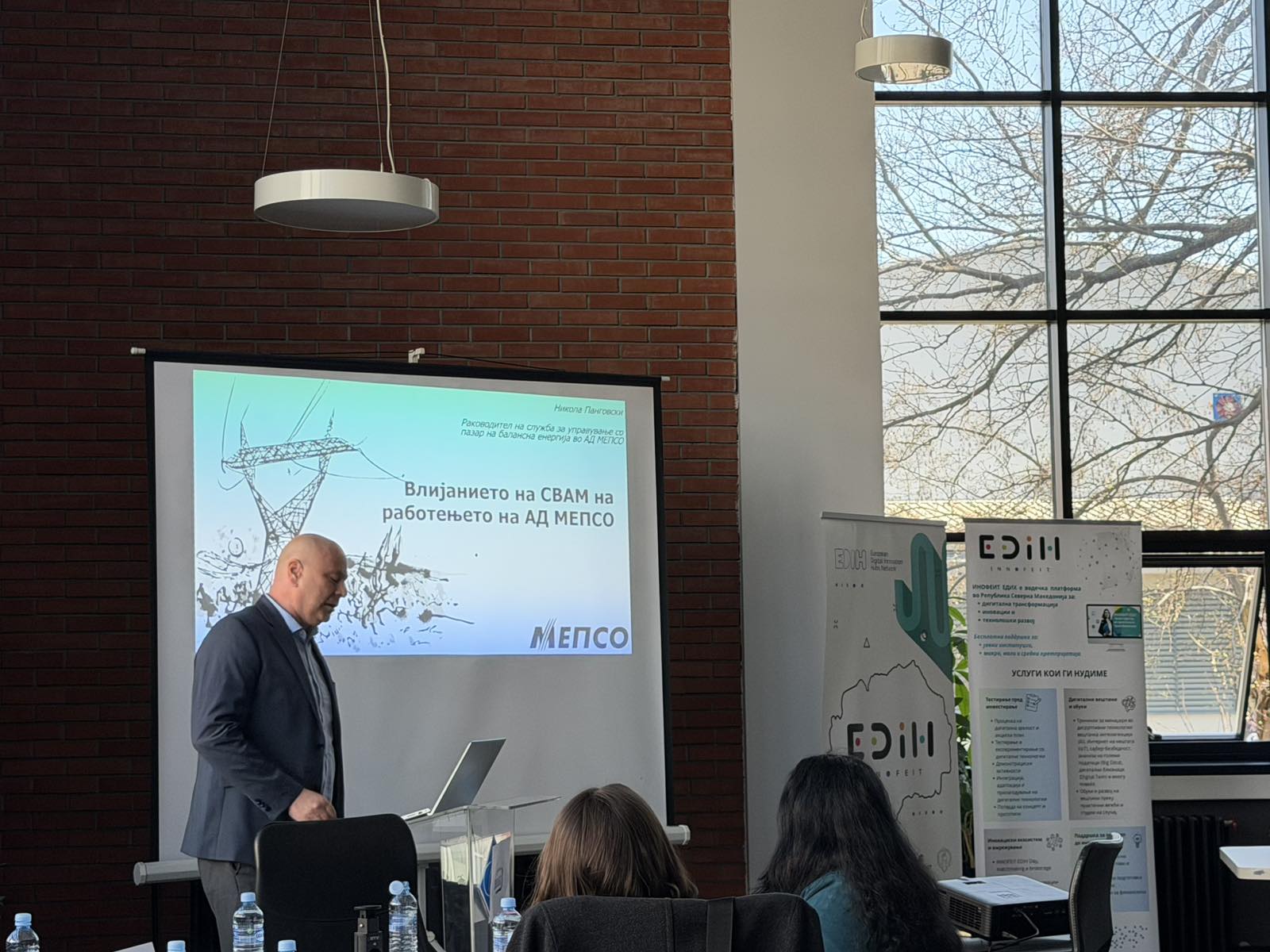
As part of the discussion, Nikola Pangovski, Head of the Balancing Energy Market Department at AD MEPSO, delivered a presentation entitled “The Impact of CBAM on the Operations of AD MEPSO.” In his presentation, he highlighted the effects of this mechanism on the electricity market, noting that although AD MEPSO is not directly affected by the implementation of CBAM, it is nevertheless important to underline that certain consequences are already becoming apparent in the operation and management of the power system.
U Regulation 2023/956 introduces the obligation to pay a carbon levy on the embedded greenhouse gas (GHG) emissions contained in products imported into the European Union market. This mechanism complements the EU Emissions Trading System (EU ETS), which prices greenhouse gas emissions generated by installations within the Union.
The introduction of CBAM is expected to significantly impact the socio-economic landscape of non-EU countries, depending on their exports of products covered by CBAM and the level of decarbonization of their industries.
The period from October 2023 to 31 December 2025 represented a transitional phase for companies operating in the six sectors covered by CBAM, while full implementation commenced on 1 January 2026.
In the meantime, the European Commission, supported by ENTSO-E, has initiated discussions on exempting transmission system operators in non-EU countries from CBAM payments related to so-called unintended deviations.
In addition to AD MEPSO, the panel discussion brought together representatives from MEMO, Makstil, the Ministry of Energy, Mining and Mineral Resources, the Customs Administration, and other institutions, who exchanged views on experiences, challenges, and potential solutions related to the implementation of CBAM.